2022 –
Joined
Waters Corporation as a Software Engineer.
I develop firmware and backend solutions for advanced medical instrumentation, including embedded C/C++ systems, Python-based AI agents, automation tools, and graphical firmware loaders. My work focuses on improving accuracy, throughput, and developer productivity in HPLC sample management and related technologies.
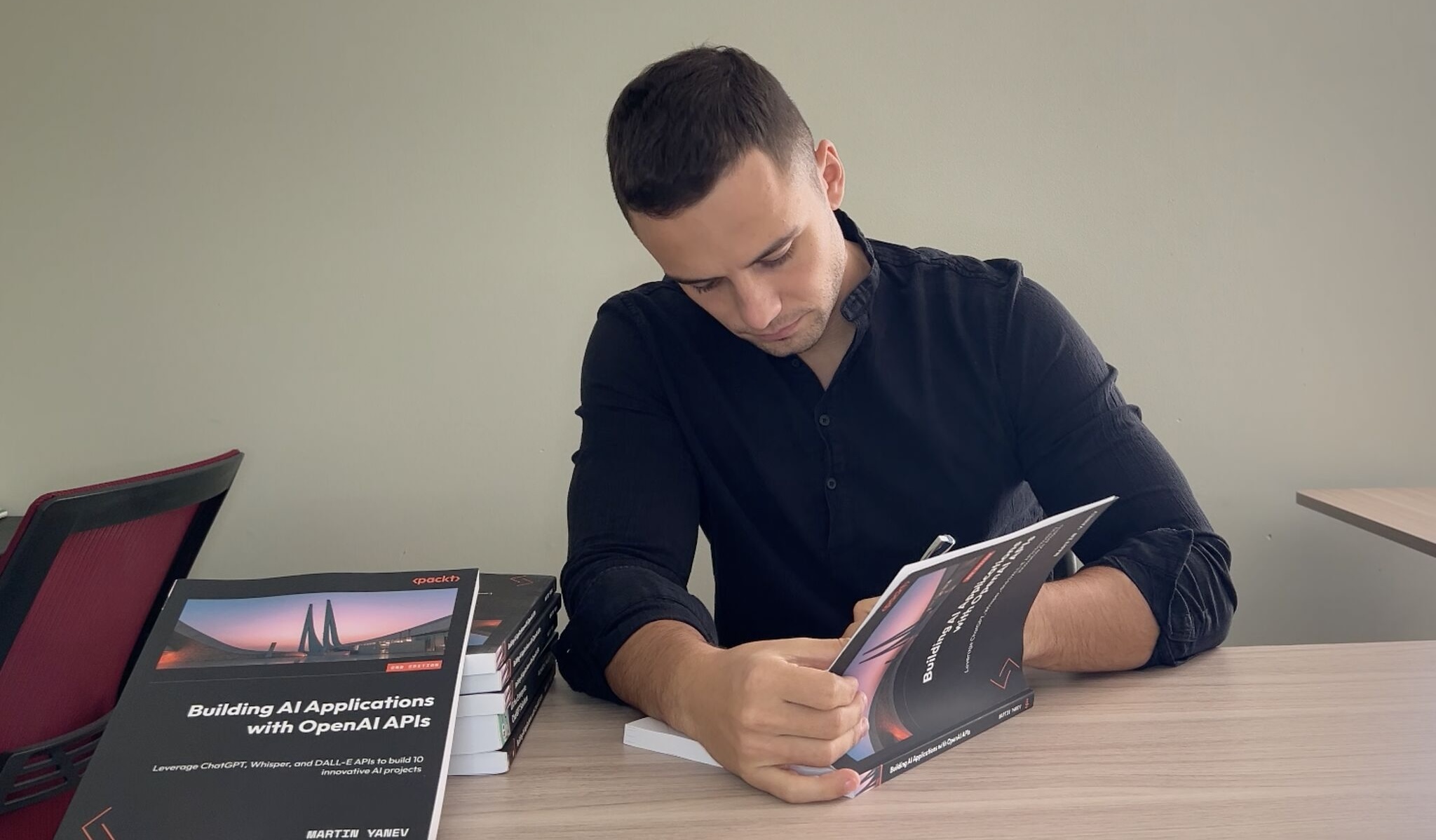
• Meanwhile in 2024, I authored the book
Building AI Applications with OpenAI APIs, published by Packt Publishing.
View on Google Books
2023 –
I was invited by the Head of the Computer Science Department,
Brady Chen, to join
Fitchburg State University as an Adjunct Professor.I teach courses focused on practical AI development and core CS topics:
• CSC7255: Data Communications & Networking
• CSC7132: Operating Systems
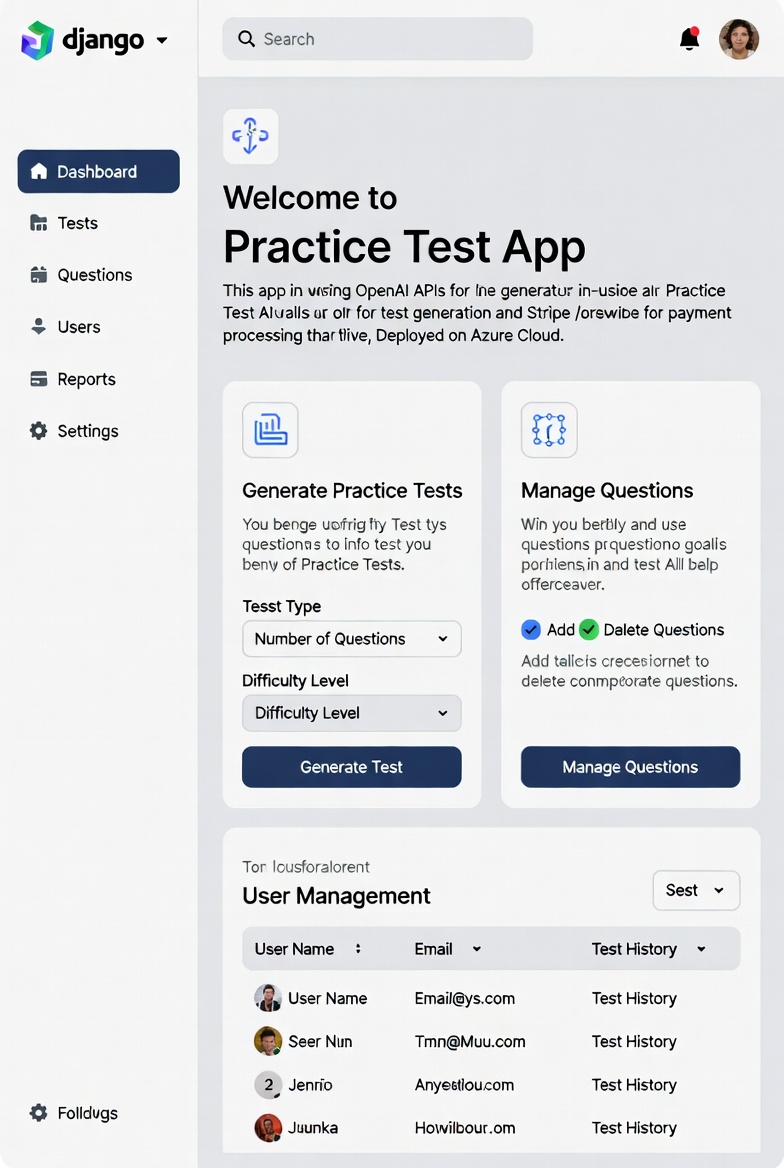
• CSC8028: Building AI Applications with OpenAI APIs
• CSC8025: Computer & Network Security
2021 – 2022
I worked at
IVY Technology as a Software Engineer.
I developed Python tools and supported network device management and debugging for Cisco product families including C9200, C9300, Nexus, and ASR A900.
2020 – 2021
Due to my passion for software engineering and AI, I moved to the United States and earned my M.S. in Computer Science from
Fitchburg State University.
2018 – 2021
I worked at
Indra Systems in the United Kingdom as a Software Engineer.
I developed, integrated, and tested components for next-gen European air traffic management system iTEC, executed over 1,000 tests, and contributed to achieving a 95% pass rate on Functional Acceptance Testing with the client.
bio
Martin Yanev is a skilled software engineer with nearly a decade of experience in AI, embedded systems, networking, and full-cycle software development. He specializes in Python and C++, with deep expertise in building AI/LLM applications & agents, automation frameworks, CI/CD pipelines, and firmware. He is the author of Building AI Applications with OpenAI APIs and an adjunct computer science professor who has created over 30 courses and maintains 100+ open-source projects on GitHub.
teaching
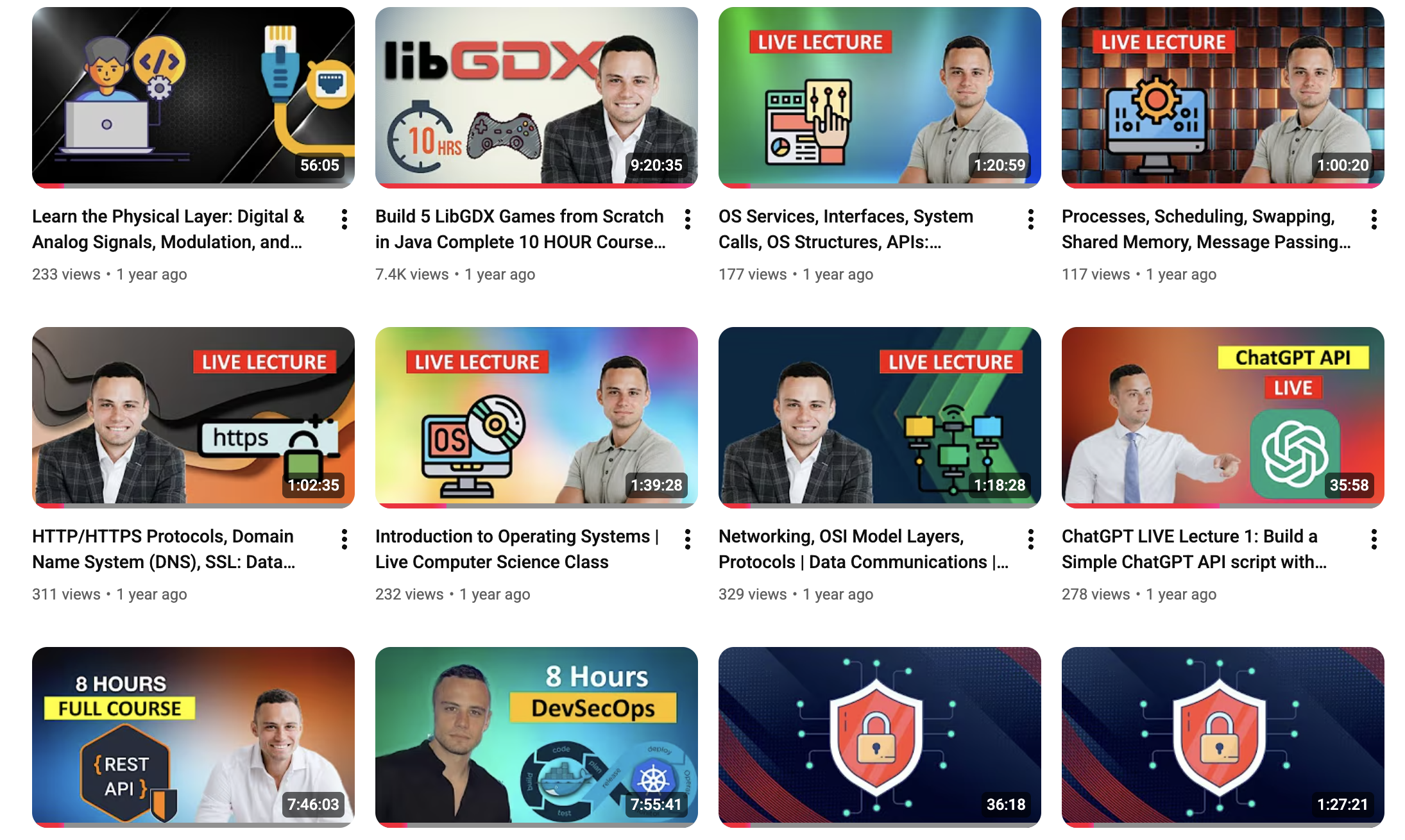
I have a
YouTube channel where I share lectures and content on computer science and AI.
In 2023 I designed and became the primary instructor for a groundbreaking AI applications course at
Fitchburg State University ❤️. The course was built around my book,
Building AI Applications with OpenAI APIs , and integrated cutting-edge AI technologies. Since its launch, the class has quickly grown in popularity, attracting students eager to gain hands-on experience with AI-driven application development.